
faidr: FM Radio & Music
Auddia Inc.Music & Audio
4.0274.00 Reviews
- Version
- 3.4.6.2
- Installs
- 100.00K
- Age Rating
- Teen
Screenshots



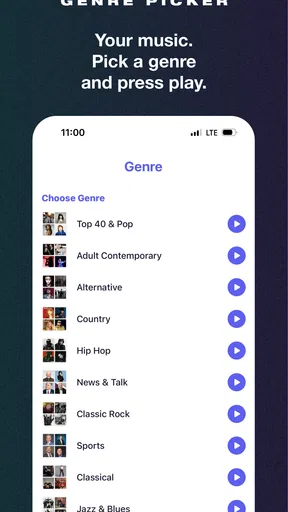

Our Review of faidr: FM Radio & Music
 Analysis by Appyee
Most radio apps ask me to accept the interruption: songs, then commercials, then more songs. faidr: FM Radio & Music takes a different approach by focusing on FM radio with new music discovery and fewer disruptions. That single idea shapes the whole experience. Instead of treating radio as background noise between ad breaks, it tries to make listening feel continuous enough for a commute, a work session, or an evening at home.
I reviewed it as a free Music & Audio app from Auddia Inc., and my impression is fairly clear: this is most appealing when I want the relaxed unpredictability of radio without constantly reaching for the skip button. It is not a replacement for a personal music library or an on-demand streaming service, but it occupies a useful middle ground. I can let a station guide the session while still discovering tracks I might not have chosen myself.
The app has a Teen content rating, works on Android versions from 8.0 onward, and its current version is 3.4.6.2. It has passed the point where I would regard it as an experimental download: the app has more than 100 thousand installs, an average rating of 4.0 from around 1.1 thousand ratings, and 274 written reviews. Those figures suggest a real user base, although they also leave room for mixed experiences depending on what each listener expects from radio.
What the no-disruption idea changes
The most important capability is not simply playing FM radio. It is the attempt to reduce the moments that break the flow of a station. In everyday use, that changes my role as a listener. With ordinary broadcast radio, I usually keep one hand near the controls because the next commercial block may arrive at any time. With faidr, I can approach a station more like a continuous stream: choose a direction, start listening, and give the app time to shape the session.
That difference matters because radio has one advantage that fully on-demand services often lose: surprise. A carefully built playlist is convenient, but it also reflects what I already know. A station can move from a familiar song to something less obvious, and that can be a better way to find new music than searching through endless categories. The app’s discovery angle works best when I am open to being guided rather than determined to hear one exact artist immediately.
I would describe the experience as controlled spontaneity. I still decide when to listen and what kind of station suits my mood, but I do not have to construct every minute myself. That makes it particularly comfortable for activities where music should support the moment instead of becoming the activity. Cooking, driving, cleaning, studying, and casual work all benefit from fewer decisions.
There is also a psychological benefit to removing repeated interruptions. Even when I am not actively annoyed by commercials, their arrival changes the atmosphere. A long uninterrupted stretch makes the app feel closer to a companion in the room than a sequence of separate broadcast segments. The real strength is continuity, not unlimited control. If I judge it by that standard, the concept makes sense. If I judge it as a substitute for a song catalog, it becomes less convincing.
How I use it in practice
I get the best results by starting with a purpose rather than opening the app and expecting it to solve my mood instantly. For a morning commute, I want something that can keep moving without demanding attention. For focused work, I prefer a station that does not tempt me into constant selection. For discovering music, I give a station a longer trial instead of abandoning it after one unfamiliar track.
That last habit is more important than it sounds. Radio discovery is not the same as search. A new song may seem merely acceptable when it first appears, then become memorable after returning in a different setting. I find that faidr works better when I let the station establish a rhythm. The app is designed around listening as a stream, so treating every track as an audition can make it feel less useful than it really is.
A practical workflow is to use it at transition points in the day. I can start a station before leaving home, continue listening during the journey, and leave it running while I begin another task. That reduces the small but repeated friction of choosing a playlist, checking recommendations, and replacing a track that does not fit. The benefit is modest in any single moment, but it becomes noticeable across a full day.
I also see value in using the app when I am tired of my own taste. Personal playlists are excellent when I know exactly what I want, but they can become predictable. A radio-based service gives me a reason to stop replaying the same comfortable choices. The trade-off is that I need to accept a little less precision. I cannot expect every selection to match my preferences, and that is part of the bargain.
For someone concerned about whether it requires payment, the app is free. That makes it easy to test without committing to a subscription first. I would still approach the free model with realistic expectations: free radio services generally make their value through the listening experience rather than promising the same degree of personal control as a paid, on-demand catalog. Here, the point is to find out whether the uninterrupted-radio approach fits your habits.
A realistic everyday scenario
Imagine a weekday afternoon when I have several chores to finish and do not want silence, but also do not want to spend twenty minutes arranging music. I open faidr, choose a suitable radio direction, and start listening while preparing food. When I move to cleaning, the session can continue without turning the task into a series of interruptions. If an unfamiliar track catches my attention, I can make a note of it and investigate later rather than stopping everything to search immediately.
This is where the product feels most natural. The app does not need to win every individual song choice. It only needs to make the overall stretch of listening pleasant enough that I forget about managing it. A conventional FM station may interrupt that flow with commercials, while a music library may require more active curation. faidr’s value sits between those two habits.
The same scenario works for a road trip, although I would be more cautious about relying on any single app as my only entertainment source. Radio-style discovery is enjoyable when the mood matches the station, but a long journey can expose the limits of passive listening. I would prepare an alternative for moments when I need a specific artist, a familiar playlist, or a different pace. The app is strongest as the default layer, not necessarily the entire travel plan.
For work, I would use it during repetitive tasks rather than demanding creative concentration. Music without frequent disruption can help create a stable background, but discovery can also pull attention toward a particularly interesting track. If I need complete control over energy and familiarity, a deliberately selected playlist is the safer choice. If I want the room to feel alive without repeatedly touching my phone, faidr is more suitable.
Where it differs from ordinary alternatives
Traditional FM radio is immediate and familiar, but its interruptions and programming decisions are outside my control. It can also be tied to local broadcast habits, which may be useful for news and local context but less appealing when I want a steady music-first session. faidr keeps the radio format while emphasizing a smoother listening experience and music discovery.
On-demand streaming services offer the opposite balance. They are better when I know the exact album, artist, or song I want. They also suit carefully organized playlists and repeat listening. Their weakness, in my experience, is the amount of choice: I can spend as much time managing music as hearing it. faidr is more relaxed because I give up some precision in exchange for less decision-making.
Curated playlists are a middle option. They can provide a consistent mood without the unpredictability of live radio, but they may not feel as fresh after repeated use. faidr’s radio identity gives discovery a more spontaneous character. The important distinction is that I am not selecting a fixed sequence; I am accepting a stream that may take me somewhere I did not plan to go.
Podcast apps are not direct competitors, but they are common alternatives for background listening. Podcasts are better when I want conversation, explanation, or a continuing story. faidr is better when spoken content would divide my attention and I simply want music to fill the space. Choosing between them depends less on sound quality than on whether I want information or atmosphere.
The trade-offs I noticed
The central limitation is the same feature that makes the app interesting: I do not get complete control. If I am in the mood for one particular track, radio-style discovery can feel inefficient. I may hear several songs that are fine but not ideal before reaching something that really fits. That is not a defect in the concept, but it is a poor match for listeners who measure value by immediate access to a specific song.
Another trade-off is the need to judge the session as a whole. A personal playlist can be edited until nearly every song feels intentional. A station has a broader arc, and its weaker moments are part of the experience. I recommend giving it a fair listening window before deciding whether it works for you. At the same time, I would not force myself to keep listening if the station consistently misses my mood; convenience should not become an obligation.
Discovery can also create a small organizational problem. When a new song stands out, I may want to identify it, save it, or return to it later. A radio experience encourages me to stay in the flow, while my curiosity pushes me toward another app or a separate note. My practical solution is to keep a simple running list of promising discoveries and investigate them when I have time. That preserves the uninterrupted session instead of turning every interesting moment into a search task.
Device compatibility is reasonably broad because the app supports Android 8.0 and later, but that does not guarantee an identical experience on every phone. Older hardware may handle modern apps less comfortably, and anyone using an aging device should pay attention to responsiveness during a normal listening session. I would test it at home before making it part of a daily commute, especially if reliability matters more than experimentation.
The Teen rating is another reason I would not describe it as a universal family recommendation without supervision. A rating is not a promise that every piece of music will suit every household. Parents choosing background audio for younger children should make their own judgment rather than assuming that a general music app is automatically child-focused.
Who gets the most from it
I think faidr is a strong fit for people who like radio’s sense of movement but dislike being pulled out of the music repeatedly. It is especially useful for listeners who want new music to appear naturally, without building a discovery queue from scratch. If your ideal session is “start something suitable and let it run,” the app’s design is aligned with that habit.
It also suits people who are trying to break out of repetitive listening. When I have played the same saved albums too often, a radio stream gives me a gentle push toward unfamiliar choices. That can refresh a routine without requiring a complete change in taste. I would use it as a discovery layer alongside an existing music service rather than insisting that it replace everything else.
Busy users gain a different benefit: fewer small decisions. Someone preparing dinner, commuting, or doing housework may not want to compare playlists and search results. Starting a station is a lighter commitment. The app becomes useful precisely because it asks me to manage less.
On the other hand, I would steer away from it if your priority is exact playback. Music collectors, album listeners, and people who build detailed mood sequences will probably prefer an on-demand service. The same applies if you need spoken programming, local broadcast information, or a fully offline listening routine. faidr’s appeal depends on accepting its radio-shaped boundaries.
I would also skip it as a primary choice if interruptions are not your main complaint. If ordinary radio already gives you the music and local content you want, switching may not create a dramatic improvement. The app earns its place when continuity and discovery matter enough to justify trying a different way of listening.
My recommendation after using it
After spending time with it, I see faidr as a focused answer to a specific frustration rather than an all-purpose music solution. Its strongest idea is easy to understand: preserve the casual discovery of FM radio while making the listening flow feel less broken. That focus is a virtue. The app does not need to compete with every feature of a massive music catalog to be useful.
I recommend trying it during a task where you normally keep changing stations or playlists. That is the fairest test because it reveals whether the reduced-disruption approach actually saves attention. Give the discovery process enough time to show its value, but keep another option available for moments when you need a particular song or a carefully controlled mood.
For me, the best role is as a dependable background companion and a source of unexpected music. It is free, accessible on supported Android devices, and developed by Auddia Inc.; its current version is 3.4.6.2. The rating of 4.0 reflects a generally positive reception without suggesting that every listener will want the same balance between freedom and control.
My final judgment: choose faidr if you want radio to feel more continuous and you enjoy discovering music without curating every track. Skip it if exact song selection, offline certainty, or a fully personalized library matters more than letting a station guide you. Used for the right situation, it makes background listening noticeably easier and less interrupted, which is a small but genuinely useful improvement.
Verdict
Strengths of faidr: FM Radio & Music
- Streams many FM stations with clear audio on supported connections.
- Offers curated music discovery beyond your local radio range.
- Simple interface makes switching stations quick and convenient.
- Can help users find new artists through live radio programming.
- Useful companion for listeners who prefer radio over on-demand playlists.
Limitations of faidr: FM Radio & Music
- Availability and station selection vary significantly by country.
- Listening continuously can consume substantial mobile data.
- Some stations may be unavailable or temporarily stop streaming.
- Audio quality depends on the source station and network stability.
- Ad interruptions may reduce the enjoyment of longer listening sessions.
Similar Picks in This Category
View All
YouTube Music
Google LLC4.4

Samsung Music
Samsung Electronics Co., Ltd.3.8

Spotify: Music and Podcasts
Spotify AB4.3

JioSaavn - Music & Podcasts
Saavn Media Limited4.3

Lark Player:Music Player & MP3
Lark Player Studio - Music, MP3 & Video Player4.6

StarMaker: Sing Karaoke Songs
SKYWORK AI PTE. LTD.4.3
Frequently Asked Questions
What is faidr: FM Radio & Music, and what can I listen to on it?
faidr: FM Radio & Music is a streaming radio app focused on music and radio-style listening. It offers access to curated stations and music programming designed for different moods, genres, and moments of the day. Instead of managing individual songs manually, you can choose a station and let the app provide a continuous listening experience, making it convenient for background music, commuting, or discovering artists.
Does faidr: FM Radio & Music require an internet connection?
Yes, faidr primarily depends on an active internet connection because its stations and music content are streamed online. It can work over Wi-Fi or mobile data, but listening for long periods on cellular data may use a significant amount of your allowance. Before downloading, users should also understand that the availability and performance of stations can vary depending on connection quality, location, and temporary service conditions.
Is faidr: FM Radio & Music free to use?
The app can generally be downloaded and used without an initial purchase, but the exact features available at no cost may depend on the current version and subscription structure. Some listening options or enhanced features may be offered through paid plans, while free access may include limitations such as advertising or fewer controls. Check the app store listing for the latest pricing and in-app purchase details before subscribing.
Can I listen to faidr in the background while using other apps?
One of the most useful aspects of a radio and music streaming app is background playback, and faidr is designed for listening while you perform other tasks on your phone. You can typically continue playback while browsing, messaging, or locking the screen, subject to device settings and operating-system restrictions. Battery optimization, background-data permissions, or an unstable connection may interrupt playback in some cases.
Is faidr: FM Radio & Music available on both Android and iPhone?
faidr: FM Radio & Music is intended for mobile users and may be available through official app stores for supported Android and iOS devices. Compatibility can depend on your operating-system version, country, and the current distribution policy of the developer. Before installing, review the Google Play or App Store page to confirm device requirements, supported regions, privacy information, and whether the version offered matches your phone or tablet.
